The produce industry is quietly undergoing a profound transformation that is reshaping consumer expectations and market dynamics.
At the heart of this shift is a growing focus on luxury and exclusivity, driven by companies like Fresh Del Monte and Dole.
These industry leaders are not only offering high-end produce but are crafting unique consumer experiences that go beyond basic nutritional needs.
Platforms such as Berry Marketplace are capitalizing on this trend by enhancing the transparency and positioning of premium offerings in the market.
With a 5% increase in fruit advertising as summer approaches, the industry is clearly ramping up efforts to spotlight these luxurious products.
Luxury Pineapple Innovation Sets a New Standard
Fresh Del Monte and Dole have taken bold steps by introducing luxury pineapple varieties, positioning themselves at the forefront of the upscale fruit segment.
These companies are not just offering fruit; they are selling an experience, appealing to consumers’ desires for exclusivity and quality.
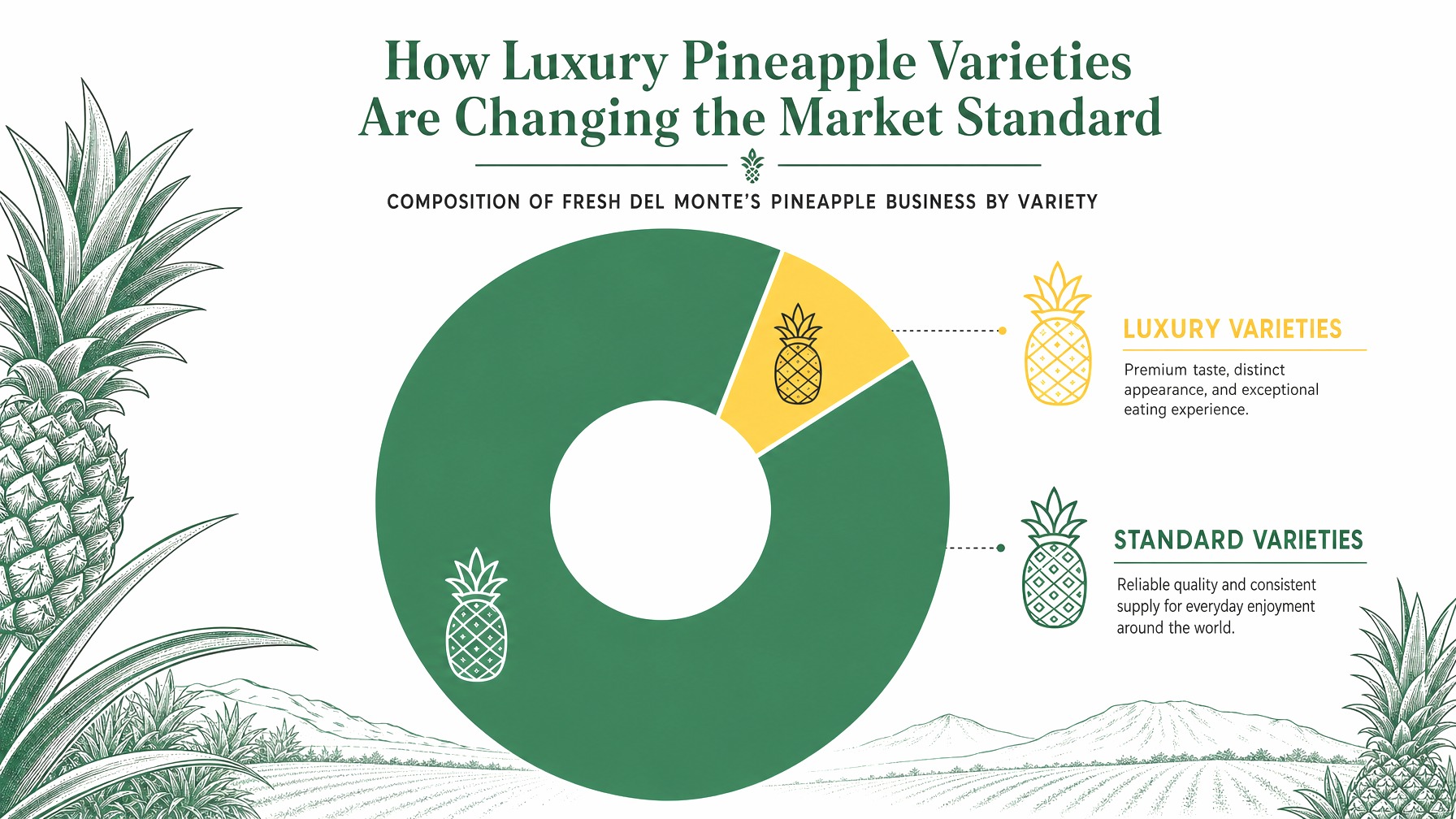
Specialty pineapple varieties now make up 10% of Fresh Del Monte’s pineapple business, highlighting the strategic importance of this segment.
For Dole, these luxury offerings, although currently a smaller part of their portfolio, represent a crucial growth area.
Both companies understand that the luxury fruit trend is a response to consumers’ growing demand for unique and sophisticated products.
This trend underscores a broader shift in consumer preferences towards craftsmanship and novel experiences within the produce aisle.
These strategic initiatives are vital for enhancing brand value and aligning with the expanding market for premium produce.
Amidst intense competition, offering something unique is a critical differentiator in the crowded produce market.
Innovations in luxury fruit not only boost sales but also enhance brand reputation and loyalty.
The emphasis on quality and exclusivity helps these companies capture the attention of discerning consumers.
By investing in luxury produce, Fresh Del Monte and Dole are setting a standard for others in the industry to follow.
Digital Platforms Revolutionize Produce Trade
Berry Marketplace is revolutionizing the produce trade with its digital platform that brings much-needed transparency to the industry.
This initiative is crucial for bolstering the market positioning of premium products.
By offering a structured and transparent trading environment, Berry Marketplace modernizes a segment that has traditionally lagged in technological adoption.
The platform’s capabilities in streamlining communication and transactions are invaluable for producers aiming to distinguish their luxury products.
- Improved transparency in trade
- Enhanced positioning of premium products
- Streamlined communication and transactions
Berry Marketplace exemplifies the potential of digital platforms to elevate the status of luxury produce.
Not only does the marketplace facilitate better trade practices, but it also reinforces the narrative of premium quality that consumers increasingly demand.
As the appetite for luxury produce grows, platforms like Berry Marketplace will become indispensable tools for producers.
This digital shift supports producers in reaching broader markets and optimizing their supply chains.
By leveraging technology, Berry Marketplace sets a new benchmark for efficiency and transparency in the produce industry.
Summer Marketing Pushes Luxury Produce to the Fore
With summer on the horizon, the produce industry is witnessing a surge in marketing efforts aimed at luxury offerings.
Fruit advertising has increased by 5%, signaling the industry’s commitment to promoting premium produce.
Companies are shifting from the traditional “fresh and healthy” messaging to focus on the unique qualities that make their products stand out.
This strategic shift in marketing is about forging deeper connections with consumers by highlighting the exclusive attributes of luxury produce.
- Increased focus on uniqueness
- Shift from generic to premium messaging
- Emphasis on exclusive attributes
By tailoring marketing strategies to underscore these premium qualities, companies are better positioned to capture the attention of discerning consumers.
Summer produce, often synonymous with freshness and abundance, is being reimagined as a luxury experience.
This reimagining appeals to consumers willing to pay a premium for quality and exclusivity.
The trend underscores the role of marketing in not just selling produce but also in selling an aspirational lifestyle.
Effective marketing of luxury produce can significantly enhance consumer engagement and brand loyalty.
Changing Consumer Expectations Drive Market Evolution
Consumer demand for exclusivity is dramatically reshaping the produce market landscape.
Consumers are increasingly seeking products that offer more than nutritional value; they seek experiences that impart a sense of luxury and distinction.
This shift compels producers to innovate and differentiate their offerings to meet evolving expectations.
Producers must now consider factors such as unique flavor profiles, sustainable sourcing, and limited availability to appeal to these discerning consumers.
This demand for exclusivity is not confined to high-end markets; it is permeating all levels of the industry.
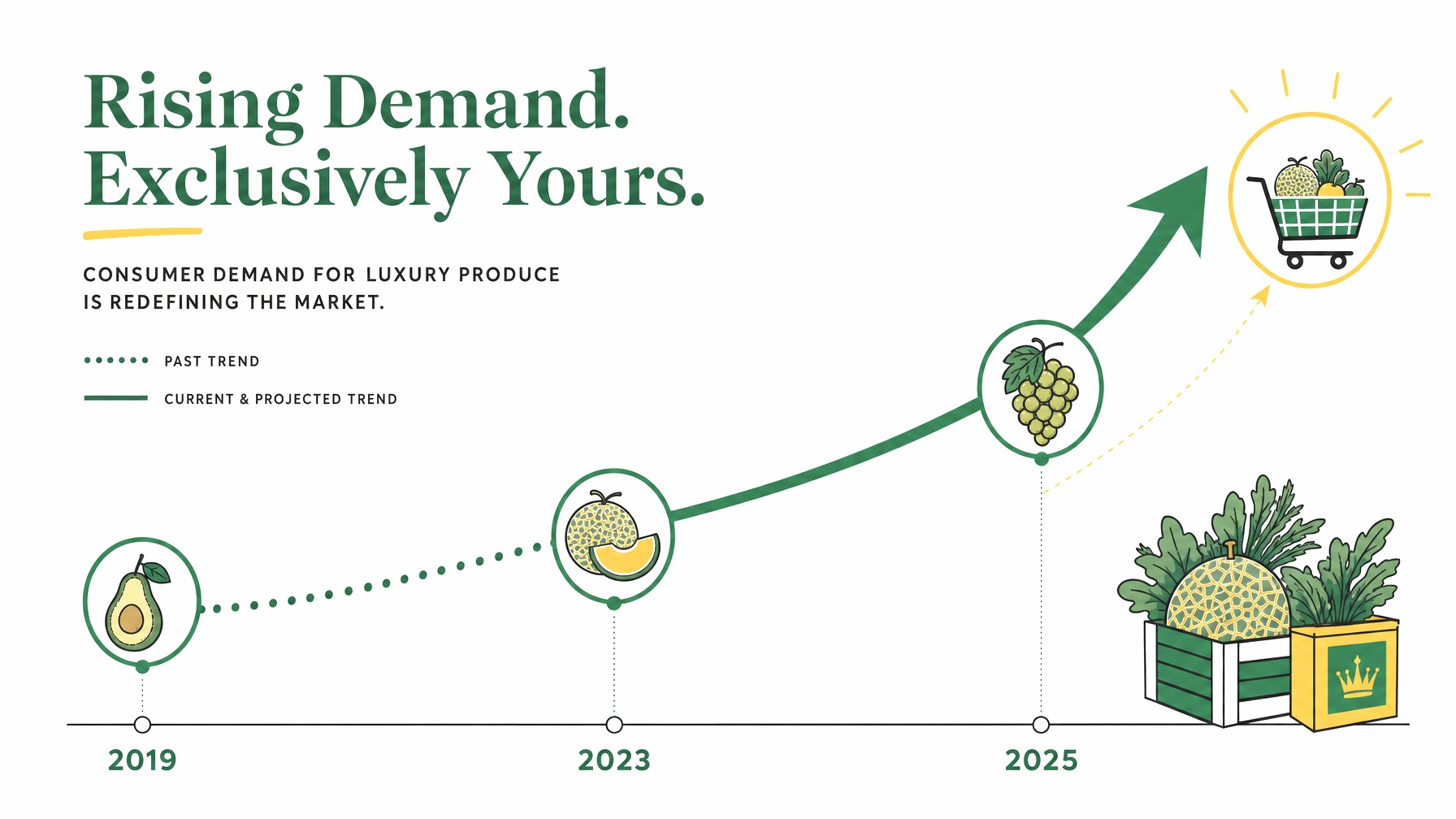
Consequently, producers must rethink their strategies to remain competitive in this rapidly changing environment.
By aligning their products with consumers’ desires for luxury, producers can tap into a lucrative market segment with substantial growth potential.
Embracing exclusivity allows producers to command higher prices and foster brand loyalty.
This trend challenges producers to balance innovation and authenticity to meet consumer expectations.
Producers who successfully adapt to this demand will likely see significant success in the evolving market.
Globalization Expands Market for Luxury Produce
Globalization is playing a pivotal role in expanding the market for luxury produce beyond traditional borders.
As economies become more interconnected, the reach of premium products extends to consumers in emerging markets with growing disposable incomes.
These consumers are increasingly exposed to global trends and are eager to embrace the luxury lifestyle.
Producers can leverage this globalization trend to introduce their luxury offerings to new and diverse audiences.
However, this expansion requires careful consideration of cultural preferences and local market dynamics to ensure success.
Producers must adapt their strategies to meet the unique demands of different regions while maintaining the exclusivity of their offerings.
- Expanding reach to emerging markets
- Adapting to local cultural preferences
- Maintaining exclusivity and quality
This global expansion presents both opportunities and challenges for producers aiming to capitalize on the luxury trend.
By effectively navigating the complexities of globalization, producers can secure a competitive advantage and drive growth in the luxury produce market.
Differentiation is Essential for Success in a Crowded Market
As the luxury trend gains momentum, differentiation becomes crucial for success in the competitive produce market.
Producers must innovate continuously to offer products that stand out in a sea of choices.
Unique product offerings, sustainable practices, and compelling storytelling are essential to capturing consumer interest.
Companies that effectively differentiate themselves can command premium prices and build stronger brand identities.
Investing in research and development to create distinctive products is a strategic imperative.
Success stories from companies like Fresh Del Monte and Dole illustrate the rewards of embracing differentiation.
These companies have leveraged innovation to create products that resonate with consumers seeking luxury experiences.
By focusing on what makes their products unique, producers can establish a competitive edge.
This edge is crucial for thriving in a crowded and rapidly evolving market.
Ultimately, differentiation is not just a strategy; it is a necessity for long-term success in the luxury produce market.
Producers Must Embrace Luxury to Thrive
For producers to thrive in today’s market, embracing the luxury trend is essential.
The expansion of the luxury produce market offers significant opportunities for those willing to innovate and adapt.
By focusing on exclusivity and premium offerings, producers can meet evolving consumer expectations and drive profitability.
The success of companies like Fresh Del Monte and Dole demonstrates the potential rewards of investing in luxury.
To capitalize on this trend, producers must prioritize quality, uniqueness, and the overall consumer experience.
As the market continues to evolve, those who embrace the luxury trend will likely find themselves at the forefront of the industry.
Ultimately, the luxury trend is not a passing fad; it is a fundamental shift that is redefining the future of the produce market.