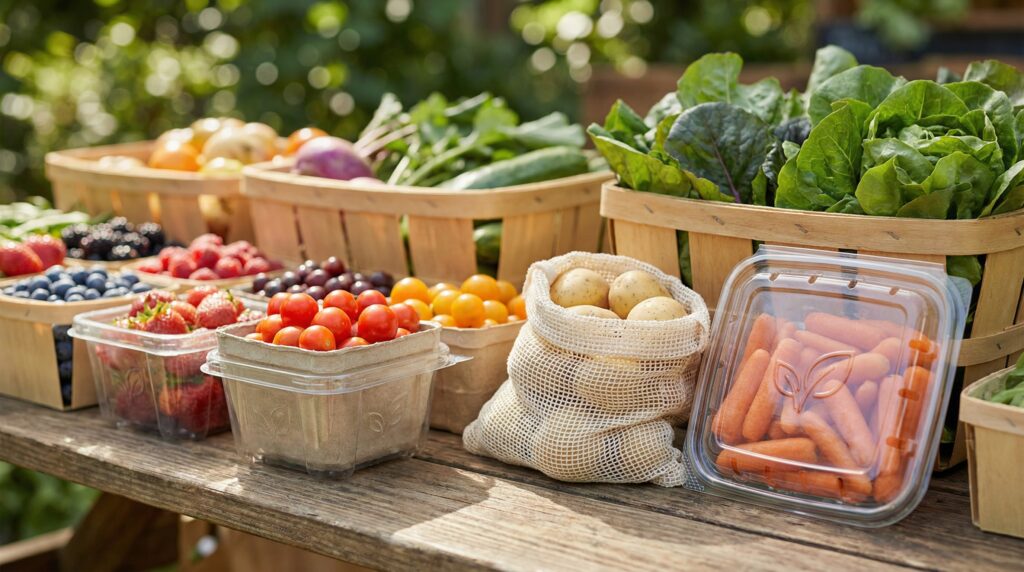
The ongoing shift towards sustainability in the fresh produce sector is driving significant changes in packaging practices.
Consumers’ increasing preference for eco-friendly choices is prompting retailers and producers to explore innovative packaging solutions that meet environmental standards.
Choosing the right packaging is crucial as it can greatly impact the shelf life of fresh produce by providing resistance to air and moisture.
The ideal packaging solutions are those made from food-safe materials that also incorporate temperature and moisture-blocking elements.
Traditional options such as mylar bags, polythene films, and PVC vacuum jars have proven effective but fall short of true sustainability.
- Shift to sustainability in fresh produce packaging is underway.
- Consumers prefer eco-friendly options, influencing retailers’ packaging choices.
- Innovative materials like kraft boxes and seaweed packaging are emerging.
- Global sustainable packaging market projected to grow significantly by 2034.
- Focus on durability and minimal emissions in new packaging solutions.
In response, the industry is actively seeking alternatives that align with eco-friendly standards, with projections indicating the global sustainable packaging market could grow from $270 billion in 2024 to $490 billion by 2034.
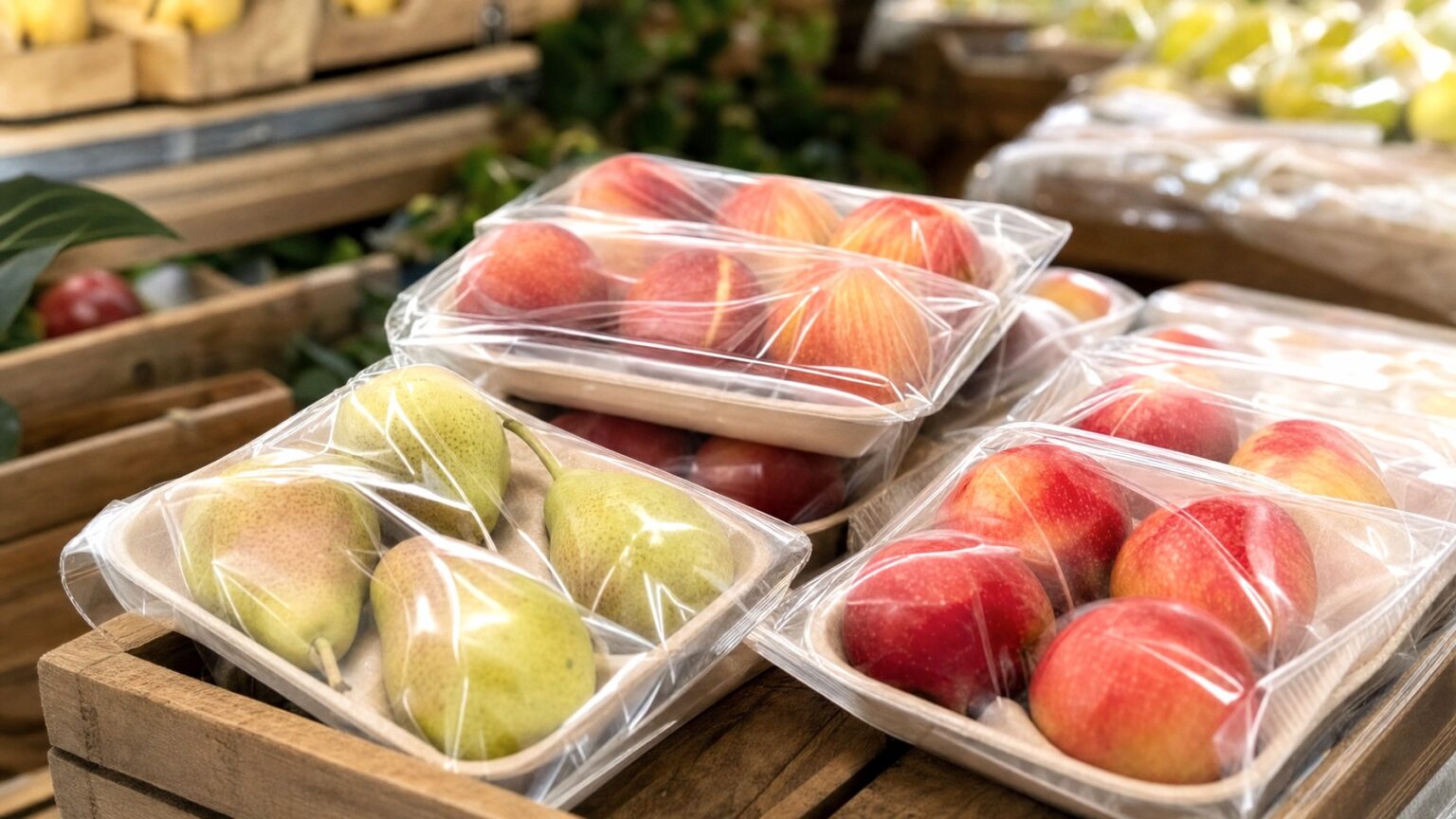
New materials like eco-friendly kraft boxes, post-consumer recycled plastics, and plant fiber trays are emerging as viable options.
These innovations aim to reduce the carbon footprint while providing the necessary durability and protection for fresh produce.
Among the most promising solutions is seaweed packaging, which offers a plant-based alternative to traditional plastic.
Made from the starch of marine plants, seaweed packaging is not only renewable but also 100 percent naturally biodegradable.
Similarly, PLA (polylactic acid) is gaining attention for its recyclable and compostable properties, offering water and airproofing capabilities to extend produce shelf life.
These materials support various printing techniques, enhancing the marketing potential for brands seeking to highlight their sustainable practices.
Minimalist approaches such as mono-material packaging are also gaining traction, providing a streamlined way to reduce waste.
Thin sheets of polyethylene or polypropylene are effective for wrapping produce, offering protection from dirt, moisture, and air while being easy to recycle.
The use of paper-based labels on these materials further reduces emissions, aligning with the broader industry trend towards minimalism and efficiency.
As the demand for eco-friendly packaging increases, the fresh produce sector continues to explore a variety of innovative solutions to meet consumer expectations and environmental standards.