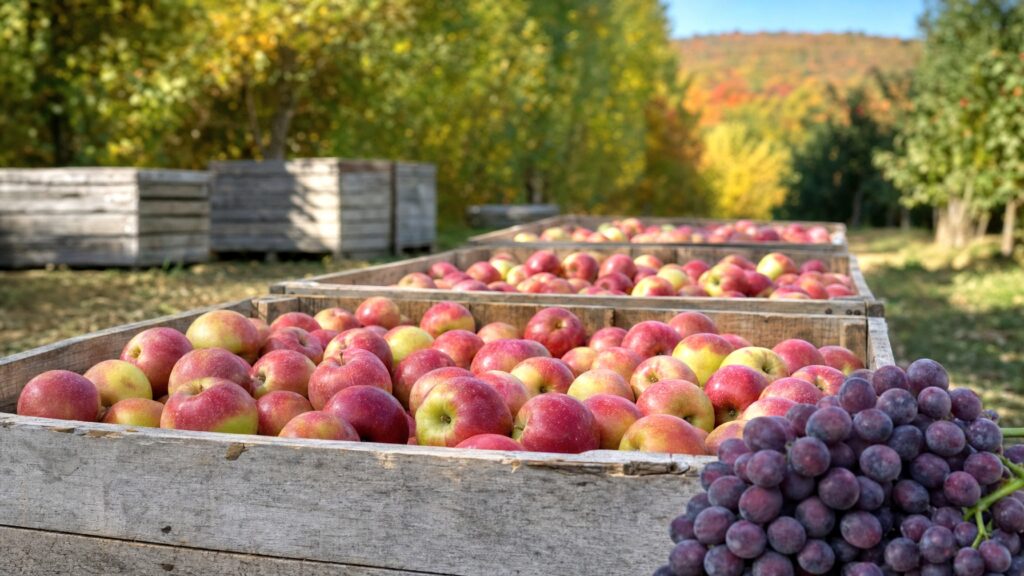
United States apple growers are turning to Washington for relief as rising labor costs continue to challenge orchard economics.
The USApple organization has thrown its full support behind the Securing Agriculture’s Workforce Act (SAWA), brought forward by Pennsylvania Republican representative G.T.
Thompson.
This proposed legislation aims to reform the H-2A program, introducing a new methodology that limits year-on-year increases in wage rates and considers housing and transportation costs provided by growers.
Lyndsee Gibbons, USApple Vice President of Communications, emphasized that for specialty crops like apples, labor accounts for at least 60 percent of total production expenses, making the current situation unsustainable for many family farms.
- Apple growers seek relief from increasing labor costs affecting production.
- USApple supports the Securing Agriculture’s Workforce Act (SAWA) for H-2A reform.
- Proposed legislation limits wage increase rates and considers other costs.
- Labor constitutes 60% of total expenses for specialty crops like apples.
- SAWA has bipartisan support from 50 co-sponsors, including key states.
The apple industry has become heavily reliant on H-2A workers due to the concentrated nature of the apple harvest.
Gibbons explained that growers need large numbers of workers during a short harvest window, complicating the assembly of a sufficient domestic workforce.
The SAWA bill has garnered support from about 50 co-sponsors from both parties, including lawmakers from major apple-growing states like Michigan, New York, and Washington.
However, the legislation still awaits Senate action and must pass during the current congressional session to become law.
As growers face these labor challenges, they are also making difficult decisions regarding orchard investment.
Apple trees take years to reach production, forcing growers to make variety decisions well ahead of understanding consumer demand.
The industry has identified retail engagement and category development as crucial investment areas for the next five years, ranking just behind production practices.
Apples have lost significant front-of-store space to berries and imported produce, prompting efforts to keep apples visible beyond the traditional fall selling period.
On the international front, maintaining access to key markets like Mexico and Canada remains a priority for USApple, as these countries account for 39 and 19 percent of US apple exports, respectively.
Interest is also growing in India, following the removal of tariffs that previously hindered market expansion.
Gibbons notes that while the upcoming crop may be smaller, production remains substantial, with some fruit likely shifting toward processing due to regional conditions.
Increased processing prices provide a valuable outlet for growers, mitigating the impact of shifting market dynamics.