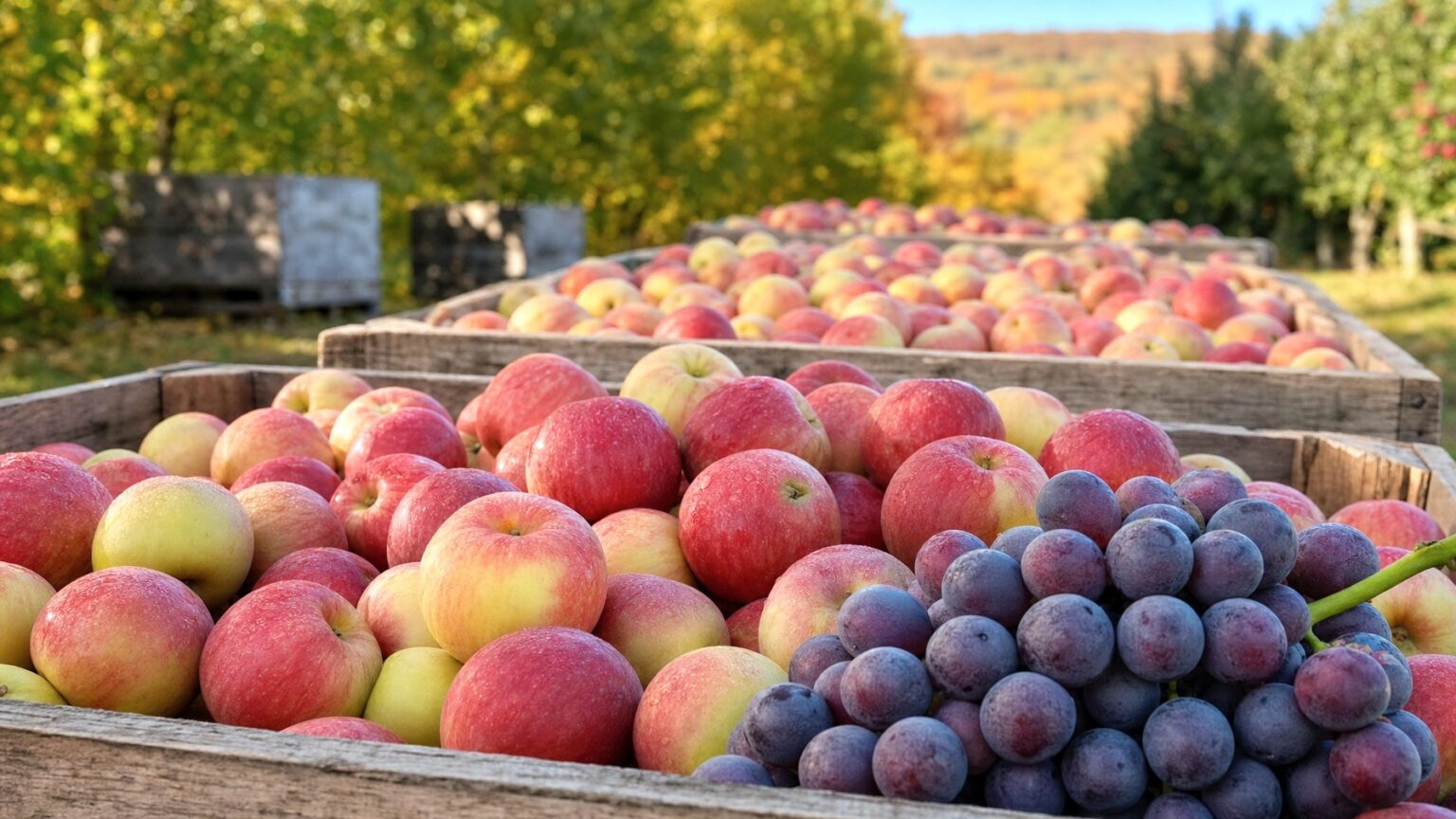
United States apple growers are urgently seeking relief from rising labor costs that are significantly impacting their operations.
As these costs continue to climb, growers are looking to Washington for solutions that can provide a bit more financial breathing room.
Lyndsee Gibbons, Vice President of Communications for USApple, has voiced strong support for the Securing Agriculture’s Workforce Act (SAWA), introduced by Pennsylvania Representative G.T.
Thompson.
This proposed legislation aims to implement changes to the H-2A program, including a methodology that limits year-on-year increases in wage rates and takes into account the housing and transportation costs provided by growers.
- Apple growers seek relief from rising labor costs impacting operations.
- Support for securing Agriculture’s Workforce Act (SAWA) grows among industry leaders.
- Labor costs constitute over 60% of production expenses for apple harvesting.
- Initially, 50 bipartisan lawmakers co-sponsor SAWA to assist growers.
- Market expansion efforts ongoing for US apples in India and Japan.
For specialty crops like apples, which are highly labor-intensive, labor accounts for at least 60 percent of total production expenses.
This has placed many multi-generational family farms in unsustainable positions over the last decade.
The industry is increasingly reliant on H-2A workers due to the concentrated nature of the apple harvest, which requires large numbers of workers within a short timeframe.
The bill has initially attracted about 50 co-sponsors from both parties, including lawmakers from major apple-growing states such as Michigan, New York, and Washington.
Meanwhile, apple growers are facing difficult decisions regarding orchard investments as they must decide on apple varieties years before understanding consumer and retail demand.
The industry has identified retail engagement and category development as crucial investment areas for the next five years, following only production practices.
Apples have been losing front-of-store space to berries and imported produce, prompting ongoing efforts to keep apples top-of-mind for consumers.
Strategies include developing more effective point-of-sale signage and promoting apples during different seasons throughout the year.
On the export front, Mexico and Canada remain crucial markets for US apples, accounting for 39 and 19 percent of exports, respectively.
Maintaining access to these markets is a priority, especially through the US-Mexico-Canada Agreement renewal process.
India is also a growing market of interest following the removal of tariffs a few years ago.
USApple is seeking progress in other markets like Japan, where non-tariff trade barriers currently prevent entry of US apples.
With a somewhat smaller crop expected, a larger percentage of fruit may go to processing this year, but strong processing prices could help alleviate some of the market pressure.