
Recent headlines underscore a significant shift in consumer behavior towards local produce, driven by heightened food safety concerns.
Following a cyclospora outbreak, Florida’s farmers and markets have witnessed a local produce boom, reflecting a broader trend toward community-based sourcing.
In Uniontown, more than 14,000 units of produce were distributed, highlighting a growing reliance on local supplies in food crisis areas.
Moreover, public enthusiasm for Britain’s favorite market has emphasized the value of local produce amidst changing market dynamics.
These developments point to a crucial opportunity for the fresh produce industry to leverage local sourcing not only for safety but also to build consumer trust.
Florida’s Local Boom as a Response to Safety Concerns
Florida’s produce markets are experiencing a surge in demand, rooted in local sourcing preferences fueled by recent safety scares.
The cyclospora outbreak has heightened consumer awareness around the origins of their food, propelling a shift towards locally grown options.
Florida farmers are capitalizing on this trend, with local markets reporting increased foot traffic and sales.
This surge reflects a broader desire for transparency and reassurance regarding produce safety.
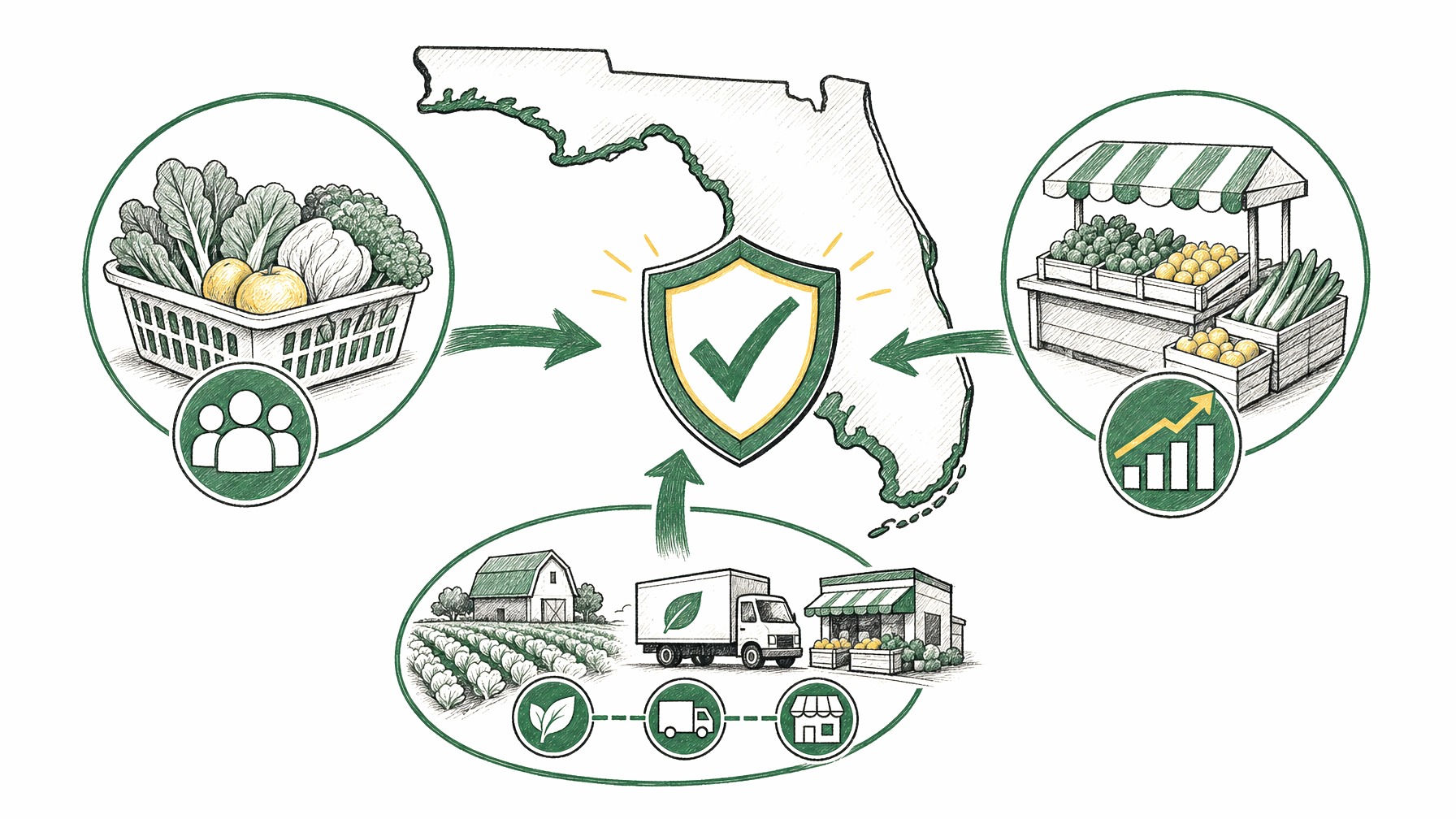
Florida’s case exemplifies how local sourcing can effectively address consumer concerns about food safety, offering a model for other regions to follow.
Three primary factors are driving this trend in Florida.
- Consumer trust: Local produce perceived as safer
- Market dynamics: Increased demand boosts local economies
- Supply chain: Shorter distances ensure fresher produce
These elements together create a robust framework for local produce to thrive in safety-conscious markets.
Uniontown’s Example of Local Sourcing in Crisis
Uniontown’s recent produce distribution event illustrates the rising importance of local sourcing in crisis situations.
More than 14,000 units of produce were distributed, underscoring the critical role of local sourcing in addressing food insecurity.
This initiative highlights how local produce can be a vital resource in times of need, offering both accessibility and assurance.
In areas facing food crises, local sourcing not only supports immediate nutritional needs but also strengthens community resilience.
Uniontown’s approach demonstrates the potential for local produce to serve as a sustainable solution in crisis management.
Key components of Uniontown’s success include:
- Community engagement: Local events foster participation
- Resource allocation: Efficient distribution of local produce
- Supply reliability: Local farms provide consistent supply
Together, these factors reinforce the value of local networks in maintaining food security.
Public Preference for Local Markets in Britain
The ongoing public vote for Britain’s favorite market highlights a growing appreciation for local produce offerings.
Markets with strong local produce sections are seeing increased consumer interest, reflecting a shift in buying habits.
This trend underscores the competitive advantage that local produce can offer in today’s market landscape.
As consumers become more discerning, markets that prioritize local sourcing are positioned to capture greater loyalty.
Britain’s markets demonstrate how local produce can be leveraged as a key differentiator amidst broader retail trends.
The appeal of these markets is driven by several factors.
- Quality perception: Local produce seen as superior
- Authenticity: Connection to local culture and heritage
- Sustainability: Reduced environmental impact
These aspects collectively enhance consumer trust and market share.

Overcoming Logistical Barriers in Local Sourcing
While local sourcing presents clear benefits, it also introduces unique challenges that the industry must navigate.
Scalability remains a primary concern, as local farms may lack the capacity to meet large-scale demand.
Logistical hurdles, such as distribution and storage, complicate the integration of local produce into broader supply chains.
Despite these challenges, local sourcing offers significant advantages in terms of safety and consumer trust.
The fresh produce industry must innovate to overcome these barriers, ensuring that local sourcing becomes a sustainable model.
Key strategies for addressing these challenges include:
- Investment in infrastructure: Enhance local logistics capabilities
- Collaborative networks: Foster partnerships between local producers
- Technology integration: Utilize digital tools to streamline operations
These approaches can help unlock the full potential of local sourcing.
Economic Revitalization through Local Produce
Embracing local sourcing extends beyond safety concerns, offering substantial economic benefits to communities.
As demand for local produce rises, local economies experience revitalization through job creation and increased market activity.
Farmers benefit directly from higher sales, enabling them to invest in better farming practices and technologies.
This economic boost can lead to a virtuous cycle, where enhanced farm capabilities further increase production efficiency and quality.
Local markets, in turn, profit from increased consumer traffic, creating a ripple effect that supports adjacent businesses and services.
Several factors contribute to this economic revitalization.
- Job creation: More demand means more farm workers
- Local investment: Enhanced spending on infrastructure
- Market diversification: Broader product offerings attract diverse consumers
These economic benefits make a compelling case for sustained investment in local produce initiatives.
Local Sourcing as a Catalyst for Industry Transformation
Embracing local sourcing represents not just a trend but a transformative opportunity for the fresh produce industry.
By prioritizing local produce, the industry can address consumer safety concerns while enhancing trust and loyalty.
This shift requires a concerted effort from all stakeholders, including farmers, distributors, and retailers.
Local sourcing has the potential to redefine market dynamics, positioning the industry for growth and resilience.
As consumer preferences evolve, the fresh produce industry must seize this moment to lead with transparency and innovation.
Ultimately, local sourcing is not merely a reactive measure; it is a proactive strategy for securing the future of fresh produce.
Enhancing Consumer Education on Local Sourcing
Educating consumers about the benefits of local produce is essential to sustaining this trend.
Many consumers remain unaware of the positive impacts of local sourcing on both health and the environment.
Effective educational campaigns can drive greater consumer engagement and support for local markets.
These campaigns should emphasize the tangible benefits, such as fresher produce and reduced carbon footprints.
Successful consumer education initiatives often involve collaboration between local governments and agricultural organizations.
Key elements of an effective consumer education strategy include:
- Workshops and events: Engage consumers directly
- Social media campaigns: Reach a wider audience
- Partnerships with schools: Educate the next generation
By increasing awareness, these efforts can bolster the local produce movement and ensure its longevity.
Global Implications of Local Sourcing Trends
While local sourcing is primarily a regional phenomenon, its implications extend globally.
As more countries adopt local sourcing strategies, international trade dynamics may shift significantly.
Reduced reliance on imported produce could impact global supply chains and trade agreements.
This shift may lead to increased competition among countries to strengthen their domestic agricultural sectors.
Moreover, global trade policies might need to adapt to support this emerging trend without compromising international relations.
Several global implications of local sourcing trends include:
- Trade policy adjustments: Reflect changing sourcing patterns
- Increased agricultural investment: Nations bolster local industries
- Environmental benefits: Lower global carbon emissions
By understanding these implications, countries can better navigate the complexities of local sourcing at a global scale.
Local Produce as a Foundation for Future Strategy
Local sourcing presents an opportunity to redefine how the produce industry engages with consumers and communities.
Despite current challenges, the benefits of local sourcing make it a crucial component of future strategies.
By investing in infrastructure, education, and collaboration, stakeholders can create a robust local produce ecosystem.
This approach promises to enhance food security, economic resilience, and consumer trust.
Ultimately, the success of local sourcing will depend on a shared commitment to innovation and sustainability.
By embracing this opportunity, the produce industry can build a future that prioritizes community well-being and environmental health.